Introducing: Adventure kit 2 Day Zero
How a Home Automation Kit
turns into a Tool for Survival
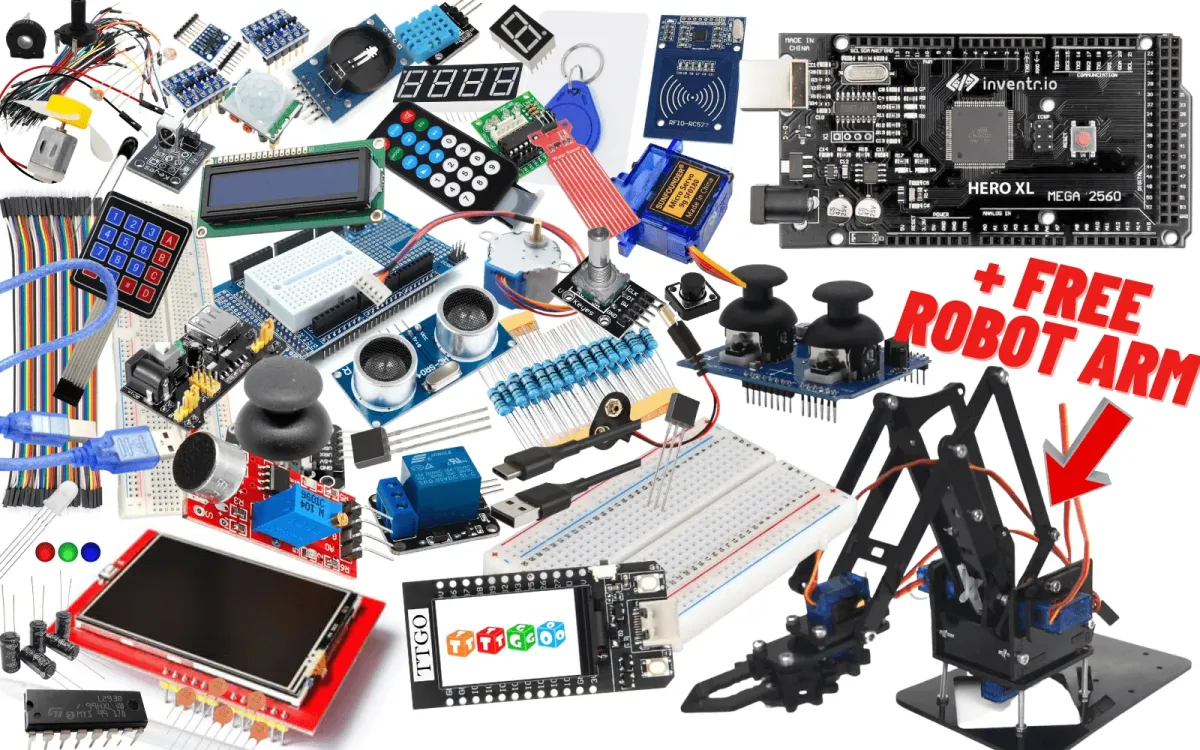
We underestimated what AI was capable of… now its our turn to fight back. Learn how to build your own home defenses and survival skills with Adventure Kit 2. Create projects such as nfc door locks, motion sensor security systems, plant growing automations, real time alarms, remote access circuits, radar turrets with touch screen, and your own videogame.
Plus a lot more however you’ll have to scroll down to learn more 🙂

Bonus! Claim a free $39.99 Robotic Arm Kit When You Order Today
Your bonus kit includes a 7 day course where you compete against Alex and Austin in a showdown of at home battles. Such as
whiteboard drawing, basketball, Battle Bricks, and a entertainment system for your pets.
What's inside
the box?
HERO XL
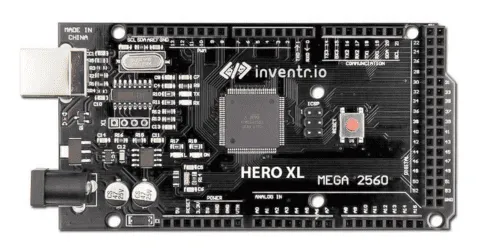
The HERO XL (Mega 2560) board is a powerful microcontroller board based on the ATmega2560 chip. It offers 54 digital input/output pins, 16 analog inputs, 4 UARTs (hardware serial ports), a 16 MHz crystal oscillator, a USB connection, and a power jack. With its larger memory size and more I/O pins compared to other boards, the Mega 2560 is ideal for more complex projects that require multiple sensors, displays, or other peripherals.
T-Display

The LilyGo TTGO T-Display ESP32 is a small development board designed for Internet of Things (IoT) projects. The board is called “T-Display” because it has a built-in 1.14-inch color display that can be used to show sensor data, graphics, or other information. The TTGO T-Display ESP32 also has support for Wi-Fi and Bluetooth connectivity, which makes it easy to connect to the internet and communicate with other devices. Overall, the LilyGo TTGO T-Display ESP32 is a powerful and versatile development board that is well-suited for a wide range of IoT projects, especially those that require a compact form factor and a built-in display.
Touch Screen Shield

The 2.4 Inch LCD Display Touch Screen Shield is a compact and versatile display module that can be easily mounted on top of any type of HERO board. The shield features a bright 2.4-inch TFT LCD screen with a resolution of 320×240 pixels and a resistive touch panel, making it easy to create interactive projects that respond to touch input.
Motion Devices

A motor for each different type of motion. Learn the differences between them and use them to your advantage.
RFID Access Card

Create your own unique ID card and be able to read the data from it. Allowing just those with access keys in.
An entire course

Learn how to use all these parts by following the storyline of the AI Apocalypse. With 8 chapters currently in the works there is a lot to explore. But more on that below
And everything else..

1x HERO XL (2560)

The HERO XL (Mega 2560) board is a powerful microcontroller board based on the ATmega2560 chip. It offers 54 digital input/output pins, 16 analog inputs, 4 UARTs (hardware serial ports), a 16 MHz crystal oscillator, a USB connection, and a power jack. With its larger memory size and more I/O pins compared to other boards, the Mega 2560 is ideal for more complex projects that require multiple sensors, displays, or other peripherals.
A sturdy and useful power supply that attaches directly to your breadboard allowing you to power circuits in a new way.
1x TTGO T-Display ESP32 With Wifi, Bluetooth, and Screen
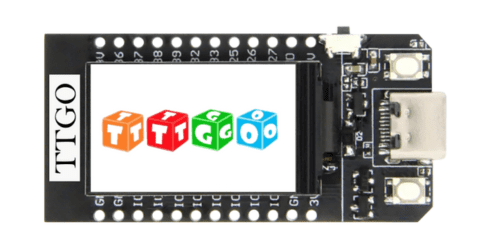
The LilyGo TTGO T-Display ESP32 is a small development board designed for Internet of Things (IoT) projects. It features an ESP32 microcontroller, which is a powerful and versatile chip that can be programmed using the Arduino IDE or other ESP32 IDEs. It can also run MicroPython language using IoT MicroPython IDEs. The board is called “T-Display” because it has a built-in 1.14-inch color display that can be used to show sensor data, graphics, or other information. The display has a resolution of 135×240 pixels and is based on the ST7789V chip. In addition to the display, the board has several other useful features, including a USB-C port for power and programming, a battery connector for portable use and two user programmable buttons. The TTGO T-Display ESP32 also has support for Wi-Fi and Bluetooth connectivity, which makes it easy to connect to the internet and communicate with other devices. It has an onboard antenna for Wi-Fi and supports both BLE (Bluetooth Low Energy) and classic Bluetooth. Overall, the LilyGo TTGO T-Display ESP32 is a powerful and versatile development board that is well-suited for a wide range of IoT projects, especially those that require a compact form factor and a built-in display.
1x 2.4 Inch LCD Display Touch Screen Shield for HERO XL

The 2.4 Inch LCD Display Touch Screen Shield is a compact and versatile display module that can be easily mounted on top of any type of HERO board. The shield features a bright 2.4-inch TFT LCD screen with a resolution of 320×240 pixels and a resistive touch panel, making it easy to create interactive projects that respond to touch input.
1x LCD1602 Blue Backlight

The LCD 1602 screen is a popular and widely used display module in the electronics industry. The screen measures 16 characters by 2 lines, hence the name 1602. It features a backlight that can be turned on or off depending on the user’s preference and lighting conditions. The screen communicates with microcontrollers using the parallel interface, which allows for easy integration into a variety of projects. It displays alphanumeric characters, making it ideal for displaying messages, data, and other information. We will use this to read and display important mission data related to your circuits.
1x RFID reader and Keychain

Create your own unique ID card and be able to read the data from it. Allowing just those with access keys in.
1x HERO XL Prototype board

Used to prototype your own shield designs
1x Breadboard Power Supply Module

A sturdy and useful power supply that attaches directly to your breadboard allowing you to power circuits in a new way.
1x Servo Motor

Servo motor to enable motion of small objects such as a lock or radar device.
1x Gyro Module (Pre-Soldered)

A small electronic device that contains a 3-axis accelerometer and a 3-axis gyroscope, which are commonly used for motion sensing and tracking in electronic projects. It also has a built-in temperature sensor and can communicate with microcontrollers using the I2C protocol
1x PIR Motion Sensor

The PIR motion sensor module is a small electronic device that uses infrared sensing technology to detect motion within its field of view. It has an adjustable sensitivity and delay time, and can be easily integrated into electronic projects. It is commonly used for security systems, lighting control, and automation applications.
1x 4 Phase Stepper Motor

The 28BYJ-48 stepper motor is a small 4-phase motor that operates on 5V DC power. It has a step angle of 5.625 degrees per step and can be controlled using a driver board or microcontroller. It is commonly used in small robotic and automation projects where precise control over the motor is required.
1x Driver Board

Allows you to easily program the stepper motor above
1x Rain/Water Sensor

The rainwater level detection sensor module is an electronic device that is used to detect and measure the level of water in a container or tank. It works by measuring the resistance of the water between the sensor probes and is commonly used in rainwater harvesting, irrigation, and other water management applications.
1x Ultrasonic Sensor

The HC-SR04 ultrasonic sensor is a small electronic device that uses sound waves to measure distance. It operates on 5V DC power and has four pins for easy integration with your HERO boards. It emits an ultrasonic sound wave and measures the time it takes for the wave to bounce back from an object, allowing it to calculate the distance to the object. It is commonly used in robotics, automation, and distance sensing applications.
1x Sound Sensor Module

The KY-037 sound sensor module is an electronic device that detects sound levels in its environment. It consists of a small microphone and a control board with adjustable sensitivity. It can be easily integrated with the HERO board and can be used to detect and measure sound levels for various applications such as sound-activated lights, noise pollution monitoring, and audio recording.
1x Real Time Clock Module
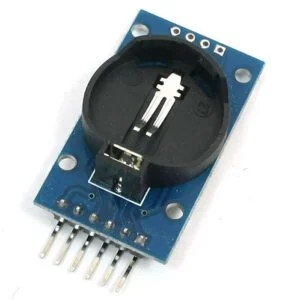
The DS3231 AT24C32 IIC module is a Real-Time Clock (RTC) module with high accuracy and precision. It consists of a DS3231 RTC chip and an AT24C32 EEPROM chip, which allows for easy storage and retrieval of data. It communicates with microcontrollers using the I2C protocol and operates on 5V DC power. It is commonly used in time-keeping applications where accurate time and date are required, such as in clocks, data loggers, and other time-sensitive projects.
1x Rotary Encoder

The KY-040 rotary encoder module is an electronic device that is used to measure the rotation and direction of a shaft. It consists of a rotary encoder, a push button, and a control board. The encoder generates pulses when the shaft is rotated, and the direction of rotation can be determined by the order of the pulses. The push button can be used to perform certain actions or functions, such as resetting the counter
1x Temperature And Humidity Sensor

The KY-015 DHT11 temperature and humidity sensor is an electronic device that is used to measure the temperature and relative humidity in its environment. It can provide temperature readings with an accuracy of +/- 2 degrees Celsius and humidity readings with an accuracy of +/- 5%. It is commonly used in weather monitoring, home automation, and HVAC control applications.
1x Joystick Module

The KY-023 PS2 joystick module is an electronic device that is used to detect the movement and position of a joystick. It consists of two potentiometers for X and Y axis movement, a button for clicking the joystick, and a control board. It can be easily integrated with circuits and communicates using the PS2 protocol. It is commonly used in gaming and robotic applications where precise control over movement is required
1x IR Reciever

The infrared receiver module is an electronic device that is used to receive infrared signals from remote controls. It consists of an infrared receiver sensor and a control board with a digital output. It can decode a wide range of infrared signals and is commonly used in remote control applications, such as controlling TVs, air conditioners, and other electronic devices.
1x BLACK IR Remote Control

Paired with the receiver above this gives a lot of controls to the user.
1x 1 Digit 7 Segment Display

1x 4 Digit 7 Segment Display

1x Relay Module 5v

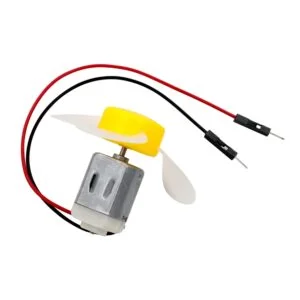
1x 3 Leaf Fan with DC motor
1x 4*4 Membrane Keypad

1x 830 pt breadboard

United States, Canada, United Kingdom, Australia
65x breadboard jumper wire

We will send you a link to all your bonuses to the email you purchased the bundle with. They are also found under the courses tab of our website!
1x 9v Battery Connector

1x 20 pin MtF Jumper Wires

11x USB A-B Cable

1x Resistors Kit

1x Logic Level Converter

1x 400 Solderless Breadboard

1x Type C USB Cable

1x Circuits Essentials Kit


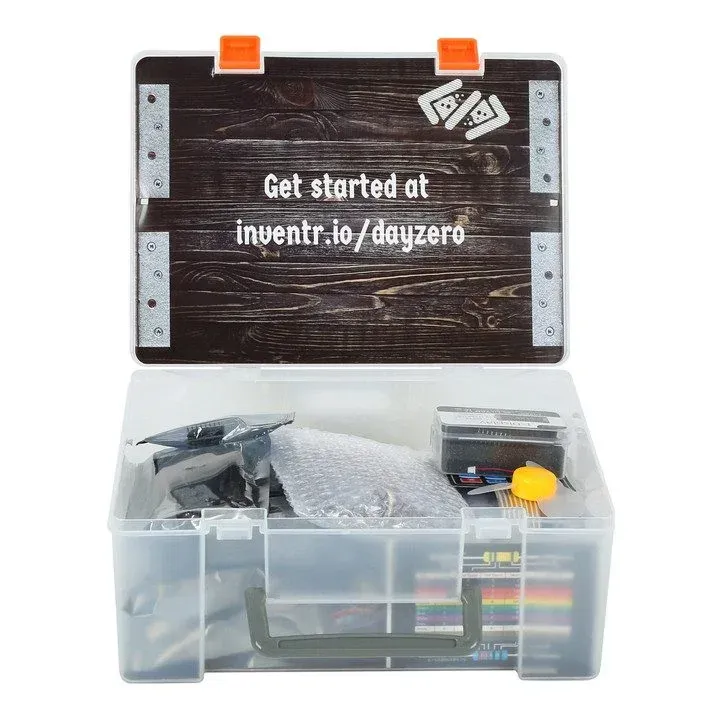
1x Storage Crate

Project Sneak Peek: RFID Door Lock


So far Over 4,000 Adventure Kit 2's Have Been Delivered
Learn how to code through storytelling.
What Missions Will You Go On?
An overview of what you will learn inside this course

Parts Tutorials
How to lessons for each of the components you see above
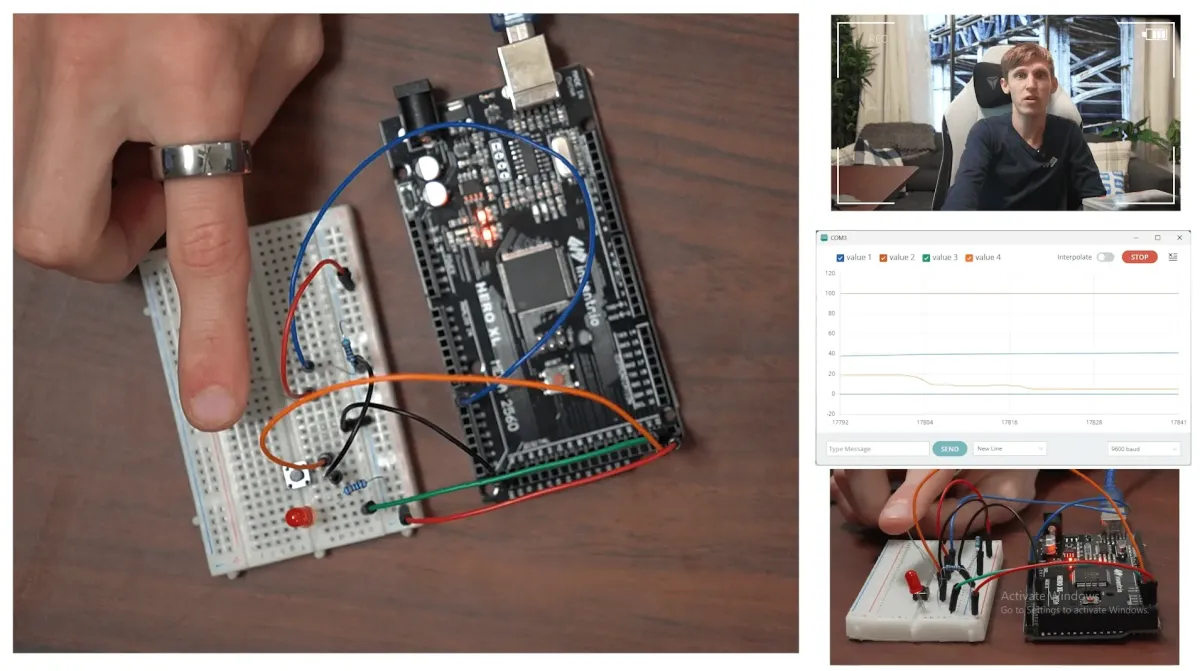
Chapter 1: Moving In
Stumble into an abandoned warehouse during the chaos. Using the HERO XL, you will fix the rusty wiring systems using LED’s and install switches and loud alarms using buttons and buzzers.

Chapter 2: Base Security
Secure your base of operations using motion sensors, keypad and RFID locks, and make an alarm system using fun RTTTL jams
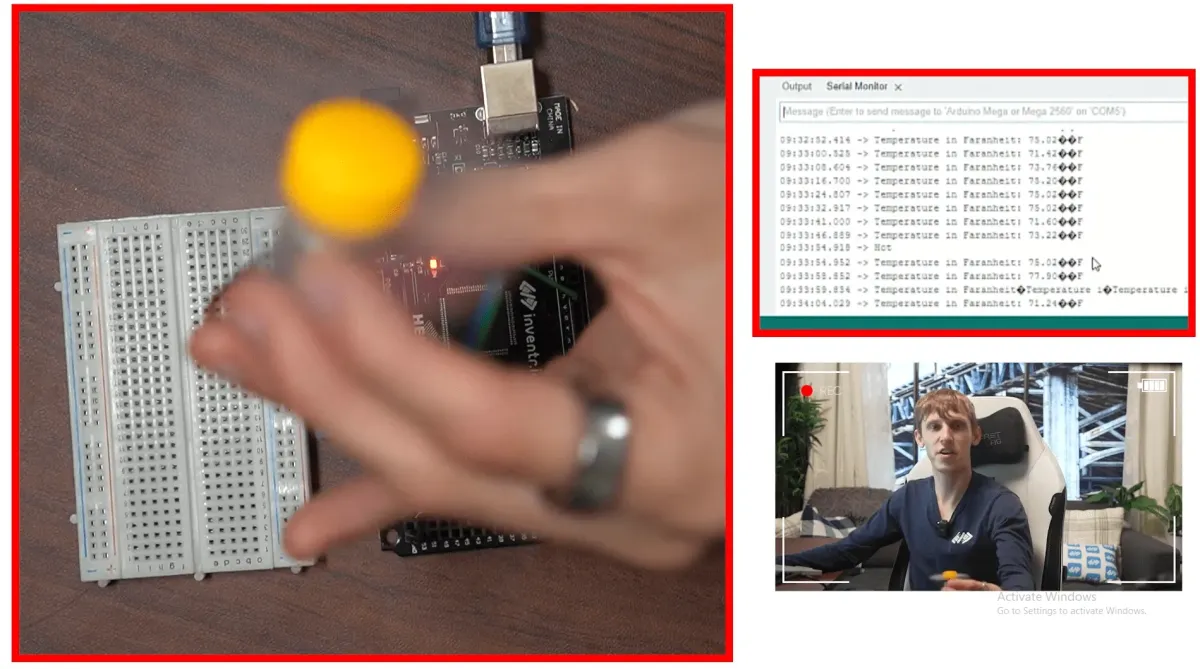
Chapter 3: Greenhouse
Protect your food with a dry plant alert system using the water sensor. Then fix the high power ventilation using fans and connecting it up to a relay.

Chapter 4: Daily Necessities
Make some conveniences: Accurate Alarm clocks using the RTC Module, Infrared RGB smart party lights with working remote, and even clap lights using the sound sensor!

Chapter 5: Spy vs Spy
Default Discover other survivors who share valuable info on how to fight back against the AI. Program the new T-Display to set up a Wi-Fi hotspot and control our systems in a web browser.item

Chapter 6: Radar Security Upgrade
Create a radar system using the touchscreen shield and ultrasonic sensor. Then add some upgrades to make an RGB Cannon to confuse the AI (using BOTH the Hero XL & T-Display).

Chapter 7: Final Showdown!
Using the T-display, connect to the secure ‘survivor-net’ to send up a “virtual signal flare” to take back the world for humanity.
Your bonus. Order Today And Get A FREE Robotic Arm
We’re tossing in our Robotic Arm Kit if you place an order today.
Your Offer,

BONUS: Free Robotic Arm Set
Adventure Kit 2 Components
Storyline Of Lessons
Basic Tutorials For Each Component
30 Day Money Back Guarantee
Invitation to our private makers group!
39.00
197.00
97.00
Free
Free
PRICELESS
Total Value = $333
Priced Normally = $236
Your Price Today = $147

FAQ
Most frequent questions and answers
Where do you ship to?
United States, Canada, United Kingdom, Australia
How do I get the training?
We will send you a link to all your bonuses to the email you purchased the bundle with. They are also found under the courses tab of our website!
How long does it take for my kit to arrive?
We ship from our warehouse in Florida every day. It usually takes 3-5 days for delivery for both domestic (USPS) and International (DHL).
What ages is this kit for?
We’ve had students as young as 6 and as old as 91. Both had a great time exploring the kit. Often we see the best results with teens or retired geeks. Warning: This kit contains small and pokey parts such as LED’s and resistors. Child supervision is required. Also parts will get hot if they are wired up incorrectly so always use caution when testing a new circuit for the first time.
Do you offer a money back guarantee?
Yes! If for some reason you didn’t have a good experience or you never opened it and lost interest we have a full 30 day money back guarantee. Just send it back to us before the 30 after your purchase arrives and we will return your payment. Refunds will take a few days to be posted to your account.
Can I see the schematics? (Are you open source?)
Yes! We also have resources available on our GitHub. The HERO is a derivative of “Arduino UNO R3 Reference design” we just changed up a few things to make it our own. If you’re curious about what goes into our HERO board we published the open source hardware files on our GitHub.
How many hours per day do I need to complete the training?
Our training easy to follow, however, this can be a downfall… if you just get in and rush through projects (copy and paste code) you won’t truly learn. You can complete most projects in the beginner training in 30-60 minutes each. Take your time to explore the training and think of each lesson as a new mental tool you can use in your maker toolkit. Once you learn how to make LED’s blink feel free to venture and create your own alternative to the main lesson – curiosity is the best teacher! Don’t stress about how many hours are optimal just work at your own comfortable pace and explore your own paths :).
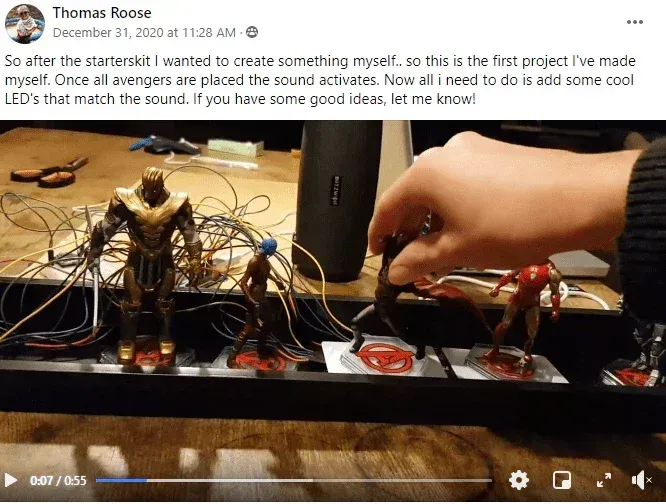
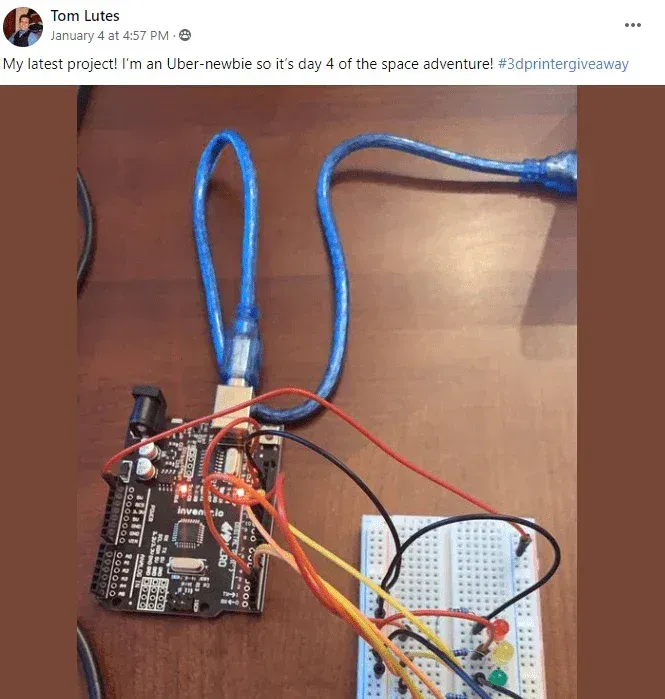
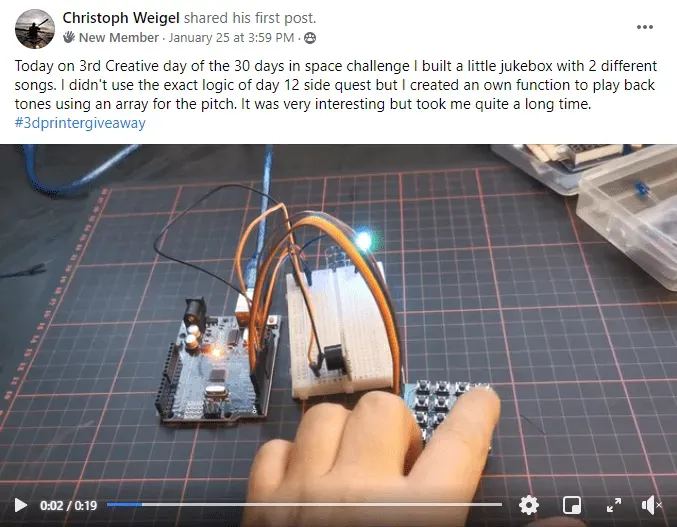
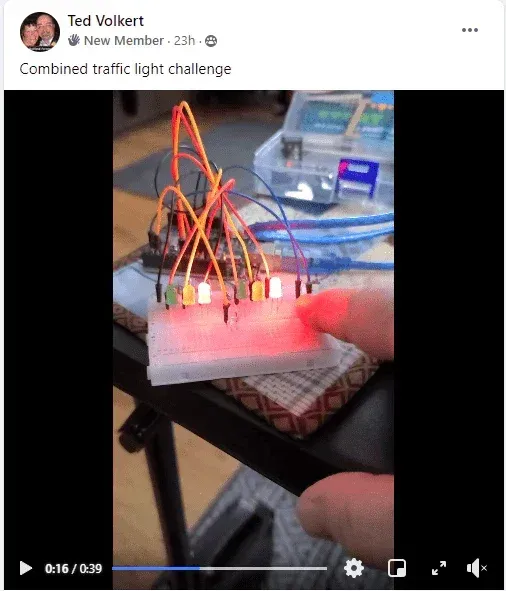
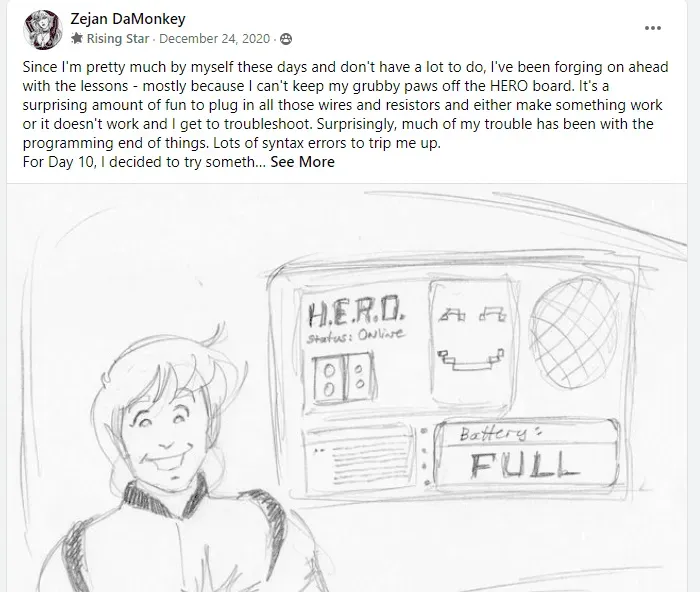
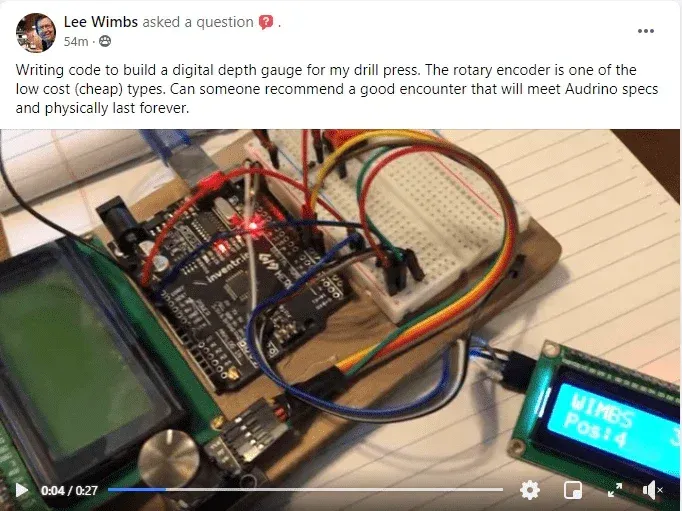
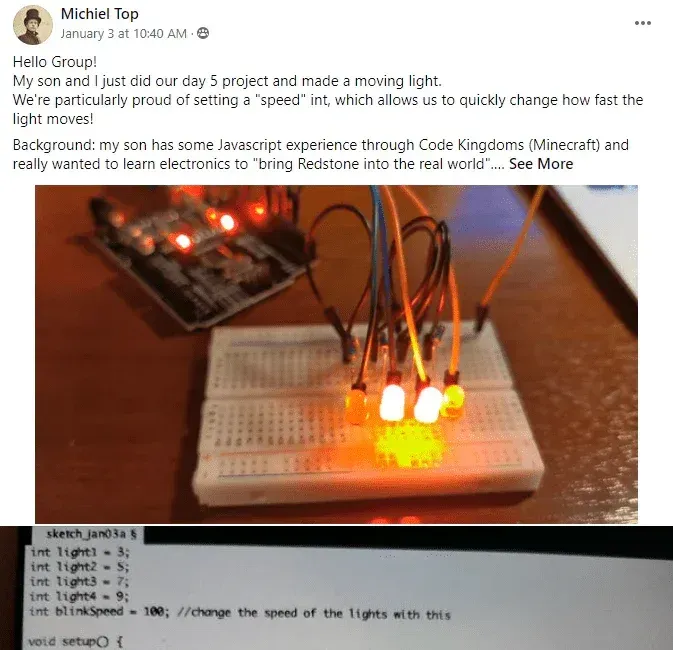
See what others have built with their
↓ HERO board ↓
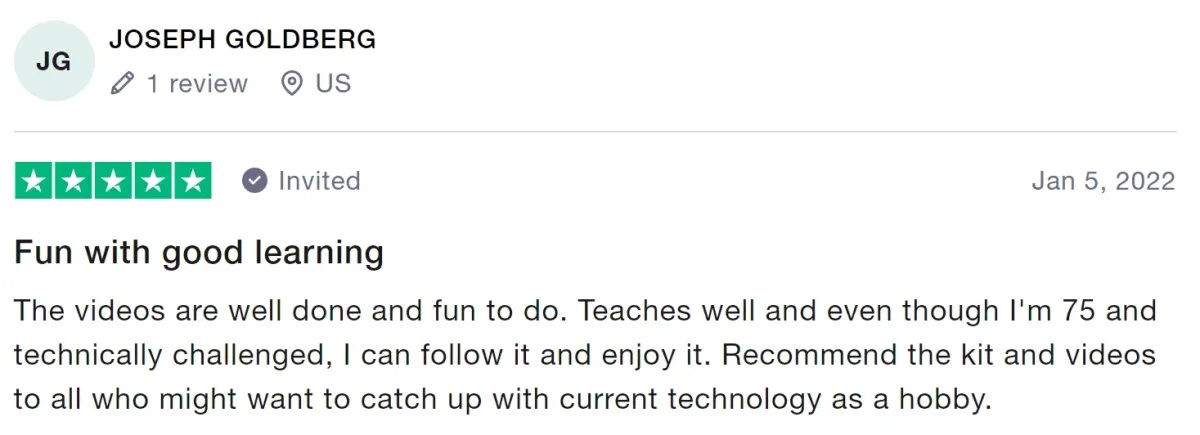
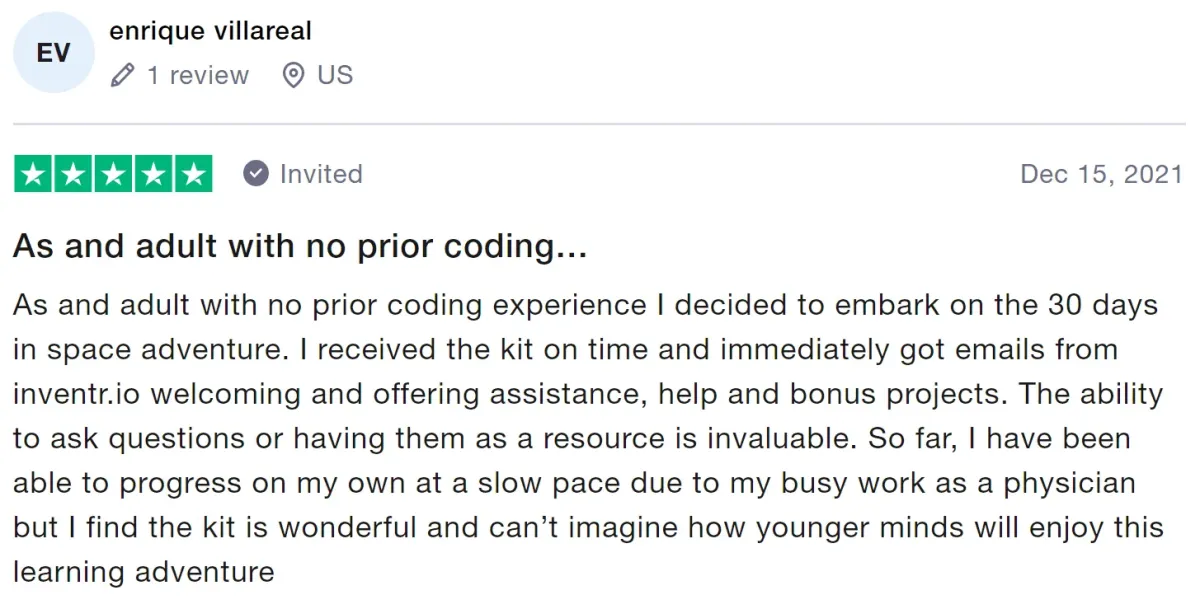
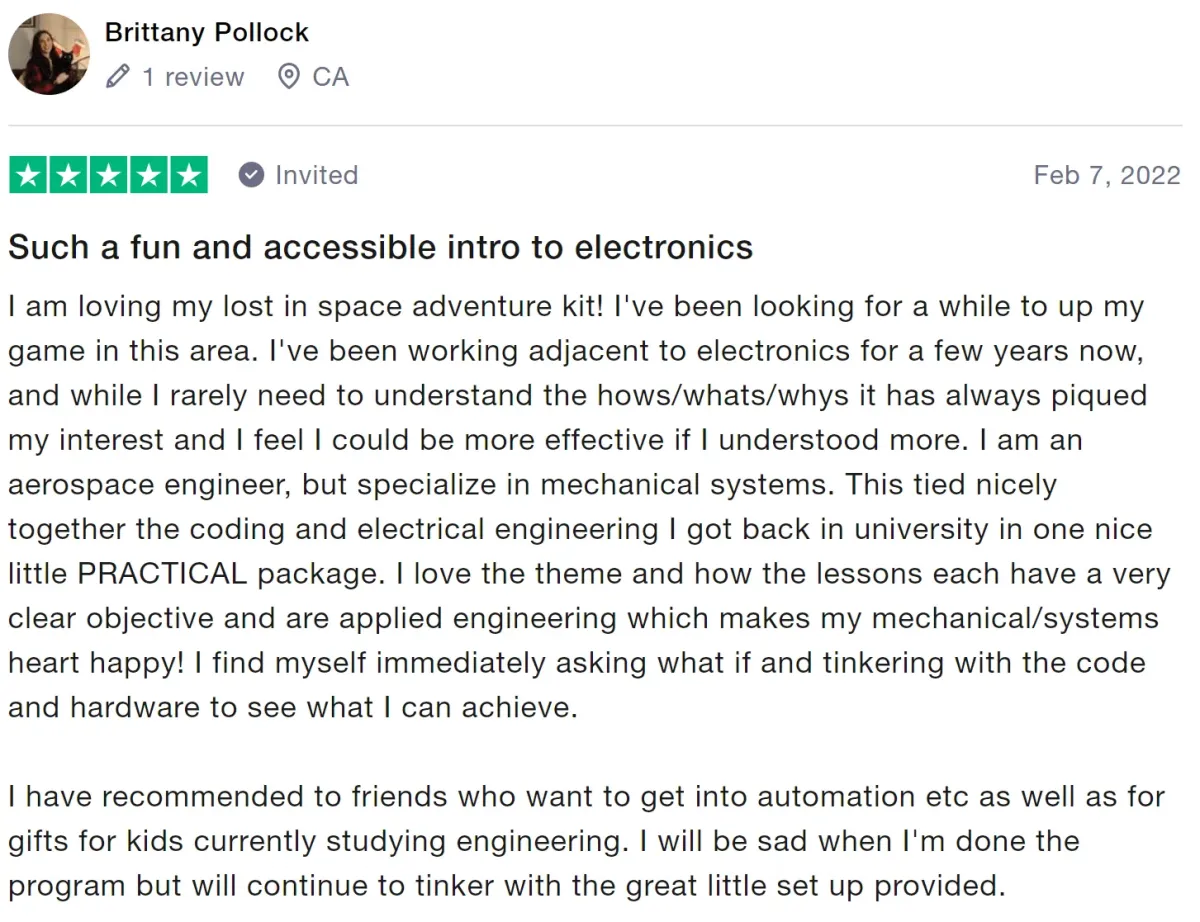
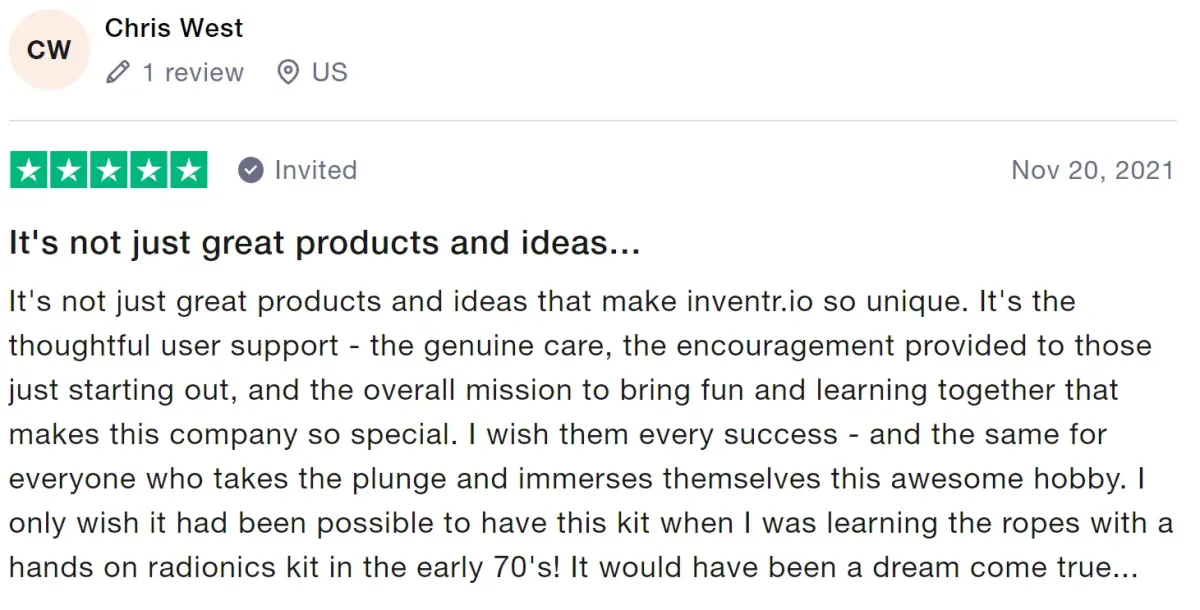
Our Training Works. Read What Others Have To Say About Our Classes










Warning: This bundle contains small and pokey parts such as LED’s and resistors. Child supervision is required. Also parts will get hot if they are wired up incorrectly so always use caution when testing a new circuit for the first time.
© 2024 CraftingTable LLC. All prices displayed in USD.